
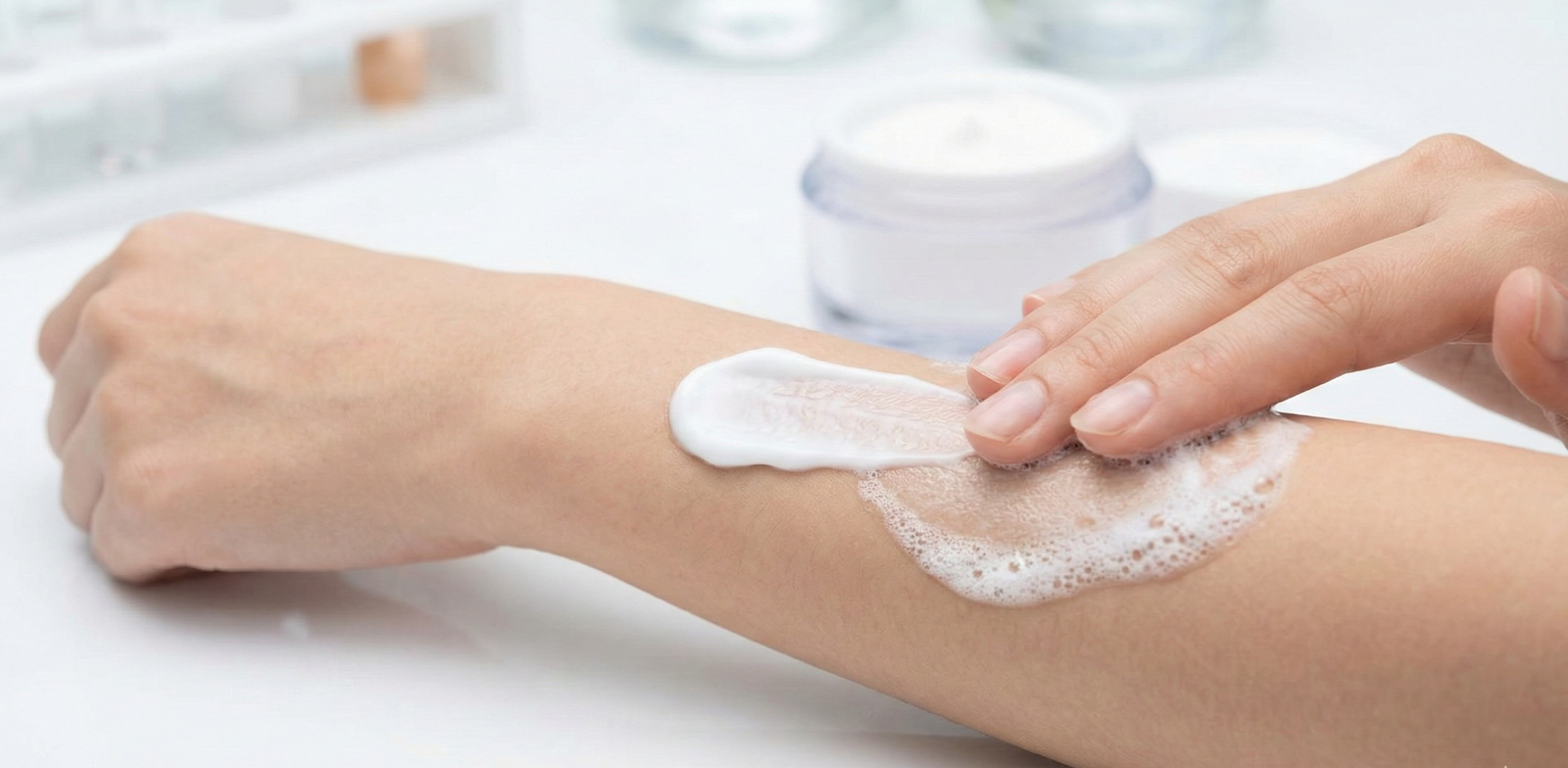
Have you ever rubbed a lotion on your skin, only to see it turn into a white, soapy lather? This "micro-foaming" kills the luxury experience. The culprit is usually high surface tension from emulsifiers—and the fix is silicone.
1. What Causes Soaping?
The "soaping effect" (or whitening) happens when emulsifiers (like Stearic Acid or Cetearyl Alcohol) entrap air bubbles during application. Because the surface tension of the water phase is high, these bubbles don't pop; they form a visible white streak on the skin.
2. Dimethicone as an Anti-Foam
Silicones are potent anti-foaming agents because of their incredibly low surface tension (approx 21 mN/m). Adding just 0.5% to 2.0% of SHINESIL™ DM 350 to the oil phase dramatically reduces surface tension.
The Mechanism
The silicone droplet enters the bubble wall and spreads, thinning the wall until the bubble ruptures. The result? The cream rubs in clear and transparent immediately.
3. Sensory Bonus: Tack Reduction
Beyond fixing the visual whitening, Dimethicone 350 also masks the stickiness of glycerin and plant oils, providing a velvety, non-tacky after-feel that defines premium skincare.